
Insulate without a ventilation plan, and you will create new problems
Every time you seal a gap or add insulation, you change how moisture moves through your home. Without a ventilation strategy designed alongside those improvements, you risk trapping moisture inside the building fabric, leading to damp, mould, and damage that is expensive to fix.
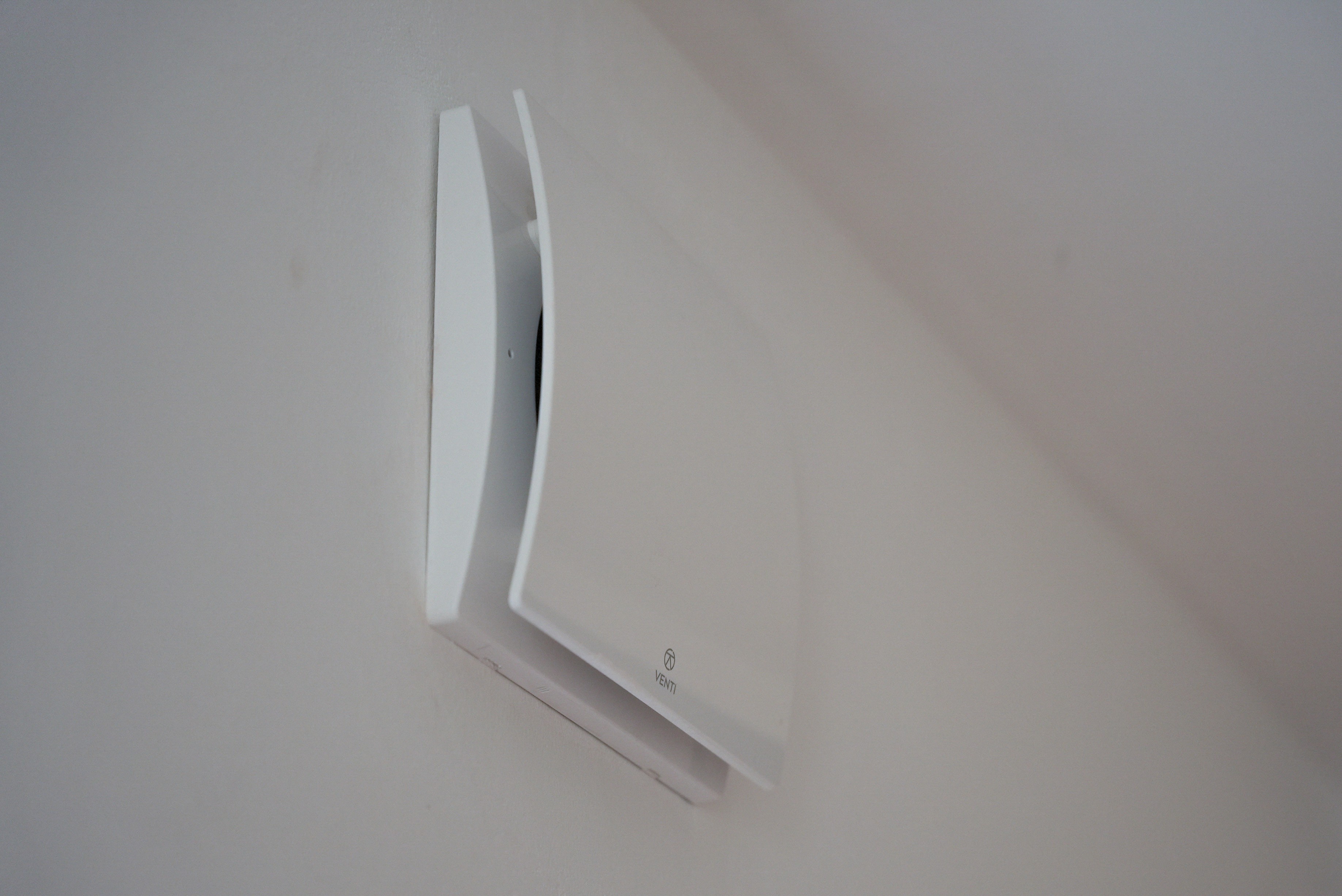
Why ventilation matters in older homes
Every home produces moisture from cooking, showering, breathing, and drying clothes. In an older, draughty home, that moisture escapes through gaps in the building fabric. Once you insulate or seal those gaps, it has nowhere to go.
The result is condensation, damp, and mould. Over time, poor air quality builds up too, with higher CO2 levels and stale air that affects sleep, concentration, and health.
Ventilation is not a bolt-on. It is part of the same problem as insulation.
Types of ventilation
The right ventilation approach depends on how airtight your home is and what other improvements you are making. Here is how the main options compare.
What to watch out for
Most homes already have some form of extract ventilation, typically a bathroom fan or kitchen extractor. But these are often undersized or poorly installed, which means they are not removing enough moisture to do their job.
Material choice matters too. Breathable materials like wood fibre allow some moisture movement through the wall. Vapour-closed boards like rigid PIR foam do not. Your ventilation strategy needs to account for which approach is used, because getting this wrong can cause the insulation itself to trap moisture inside the wall.
The short version: insulation and ventilation need to be designed together. If they are not, you may fix one problem and create another.
"Extraction fans are often undersized and underperforming, so they are not actually able to take moisture out of your home. This is one of the most common mistakes we see when people insulate without a whole-house plan."
Becky Lane, Founder and CEO at Furbnow

How Furbnow approaches ventilation
Ventilation is assessed as part of every whole-house survey, not treated as an afterthought. Our PAS2035-certified retrofit coordinators measure how well your existing fans perform, identify moisture risks, and model how your proposed insulation will change airflow through the building.
The result is a ventilation strategy designed for your specific home, accounting for the materials being used, the airtightness you are targeting, and the rooms most at risk.
Get it right from day one
If you are planning insulation, draught-proofing, or a heat pump, ventilation should be part of the conversation before work starts, not something you retrofit later. A Furbnow Home Energy Plan designs your ventilation strategy alongside every other improvement, so nothing gets missed and nothing undermines anything else.
Frequently asked questions
Do I need MVHR?
Can't I just open windows instead?
Will I hear the fans?
Does ventilation add much to the cost of insulation?
What if I have already insulated without sorting ventilation?
0330 165 6147
AWARDS & RECOGNITION